Priced Beyond Imagination: Inside the Private Networks Where Genetically Singular Animals Change Hands for Fortunes
There is a particular kind of desire that no conventional marketplace can satisfy — the desire not merely for something expensive, but for something that, by the immutable logic of genetics, cannot be replicated. It is this desire that animates the most rarefied tier of exotic animal collecting in the United States today, where a single specimen carrying the right combination of recessive mutations can command a price that exceeds a Manhattan co-op, a vintage Ferrari, or a signed Basquiat.
Welcome to the morph economy: a world of closed auctions, encrypted group chats, and handshake agreements between breeders and collectors who operate at a level of discretion that would make a private equity firm seem transparent by comparison.
The Genetics of Exclusivity
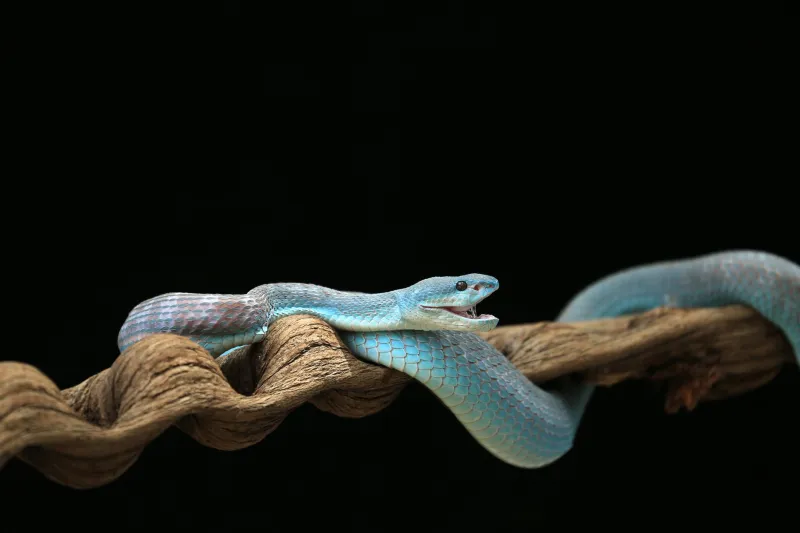
To understand why certain animals command such extraordinary sums, one must first appreciate what a morph actually represents. In the context of exotic reptiles, amphibians, and select avian species, a morph is a genetic variant — a specimen expressing a combination of mutations that alter its coloration, pattern, scale structure, or other physical characteristics in ways that deviate dramatically from the wild type. Some morphs are common enough to appear in pet stores. Others exist in populations numbering in the dozens worldwide. And then there are the true rarities: animals carrying novel compound mutations — sometimes the product of years of deliberate selective breeding, sometimes the result of a spontaneous genetic event — of which perhaps three, five, or ten individuals exist on the entire planet.
These are the specimens that move serious money.
The biology is straightforward enough in principle. Many of the most coveted mutations are recessive, meaning both parents must carry the relevant gene for the trait to express visually in offspring. When a breeder introduces a newly discovered recessive mutation into a line that already carries several others, the statistical odds of producing an animal expressing all of those traits simultaneously become vanishingly small. Some combinations require multiple generations and years of meticulous pairing. The result, when it finally emerges, may represent the only living example of that particular genetic confluence.
The Architecture of the Underground Market
The phrase "underground market" carries connotations that deserve immediate qualification. The trade in captive-bred morphs, conducted among licensed and reputable breeders and collectors, occupies entirely legal territory in the United States. What makes it "underground" is not its legality but its opacity. This is a market that operates almost entirely outside of public view, governed by reputation, personal relationships, and an informal but rigidly enforced code of conduct.
At its most accessible tier, transactions occur on specialized online forums and social media communities where photographs and asking prices are posted publicly — though even here, the most significant animals rarely make it to open listing. They are spoken for before they are announced, passed between parties who have cultivated relationships over years or even decades.
At the highest level, the market resembles nothing so much as the private sale rooms of major auction houses. Breeders with sufficiently rare animals may host invitation-only events — sometimes virtual, sometimes conducted at reptile expos that function as cover for far more consequential business — at which a curated group of pre-vetted collectors is given the opportunity to bid or negotiate. Prices at this tier routinely reach five figures for significant specimens and, for the truly exceptional, have been known to cross into six and even seven-figure territory.
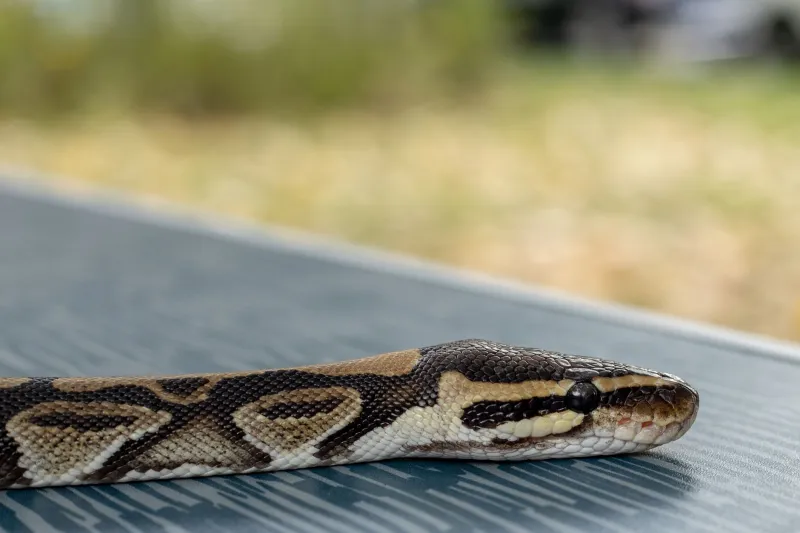
Those figures are not hypothetical. Within the ball python community alone — a species that has become the dominant canvas for morph development in the United States — individual animals carrying combinations of ultra-rare mutations have been documented selling for sums that dwarf the median American home price. The gecko and chameleon communities have produced comparable transactions, as have certain segments of the high-end koi and ornamental fish market.
The Collector Psyche
What drives a person of substantial means to spend that kind of money on a single animal? The answers, as with most questions about extreme collecting behavior, are multiple and layered.
There is, first, the straightforward appeal of genuine scarcity. In a consumer culture awash with limited editions and artificial exclusivity, an animal that exists in single digits worldwide represents something that money alone cannot manufacture on demand. The collector who acquires such a specimen possesses something categorically different from what wealth can ordinarily purchase: a biological artifact that is, in the most literal sense, one of a kind.
There is also the intellectual dimension. The most sophisticated collectors in this space possess a command of genetics, husbandry, and breeding theory that rivals professional researchers. For them, acquiring a significant morph is not merely a trophy purchase — it is the culmination of years of study, relationship-building, and strategic thinking. The animal represents a kind of living proof of expertise.
And then there is the investment calculus. While the exotic morph market does not offer the liquidity of equities or the institutional infrastructure of fine art, the most significant specimens have demonstrated consistent appreciation. A collector who acquires a foundational animal — one carrying a novel mutation that will subsequently become sought-after — may find that their initial outlay multiplies substantially as the mutation gains recognition and demand outstrips the supply that even the most prolific breeders can produce.
The Breeders Who Make It Possible
Behind every seven-figure specimen is a breeder who spent years, sometimes an entire career, engineering the conditions for its existence. These individuals occupy a peculiar position in American collecting culture: simultaneously artists, scientists, and entrepreneurs, operating businesses that may generate extraordinary revenue while remaining almost entirely invisible to mainstream awareness.
The most celebrated breeders in the morph world are recognized by name within their communities with the kind of reverence typically reserved for master craftspeople. Their reputations are their most valuable asset, and they guard them accordingly. Animals sold under the banner of a respected breeder carry a provenance that matters to serious collectors — not merely as a guarantee of health and legitimate lineage, but as a marker of the animal's place within the broader narrative of the hobby's development.
For these breeders, the creation of a genuinely new and significant morph is not simply a commercial event. It is, in a very real sense, a contribution to a living art form — one that happens to be written in the language of genetics rather than pigment or stone.
A Market Defined by What It Refuses to Become
Perhaps the most striking characteristic of the elite morph market is its studied resistance to the forces of democratization that have disrupted so many other collecting categories. The internet has made information universally accessible, but it has not flattened the hierarchy of this world. If anything, the most significant transactions have grown more private, more relationship-dependent, and more inscrutable to outsiders as the market has matured.
For the collectors who inhabit its uppermost tier, this opacity is not a flaw. It is the feature. The inaccessibility of the market is inseparable from the value of what it trades in. When the thing being collected is biological singularity — life itself, expressed in a form that has never existed before and may never exist again — the barriers to entry are not merely acceptable. They are essential.
In the morph economy, the price of admission is not simply money. It is knowledge, patience, reputation, and the kind of refined obsession that recognizes no ceiling.