Venom and Valor: How Captive-Bred Venomous Reptiles Became the Crown Jewel of Elite Exotic Collecting
There is a particular kind of collector — patient, methodical, unmoved by trends — who measures prestige not by what the market celebrates, but by what it cannot easily replicate. For a growing cohort of affluent American enthusiasts, that standard is now being set by one of nature's most formidable architects: the venomous snake.
Once confined to the basements of hobbyists and the back rooms of herpetological societies, the captive-bred venomous reptile market has undergone a quiet but profound transformation. Today, rare morphs of species like the Gaboon viper, the rhinoceros viper, and select elapid bloodlines are changing hands at prices that would not look out of place in a fine art auction catalog. The collectors driving this market are not thrill-seekers. They are scholars, strategists, and connoisseurs — individuals who have concluded, after exhaustive research, that venomous reptiles represent one of the most intellectually demanding and visually extraordinary collecting categories available to serious enthusiasts.
The Anatomy of a Booming Market
Industry observers who track the captive exotic reptile space note that the past decade has produced a fundamental shift in buyer demographics. Where the venomous keeping community was once dominated by working-class hobbyists operating on modest budgets, it now attracts professionals — physicians, attorneys, tech entrepreneurs, and finance executives — who bring both capital and rigor to their acquisitions.
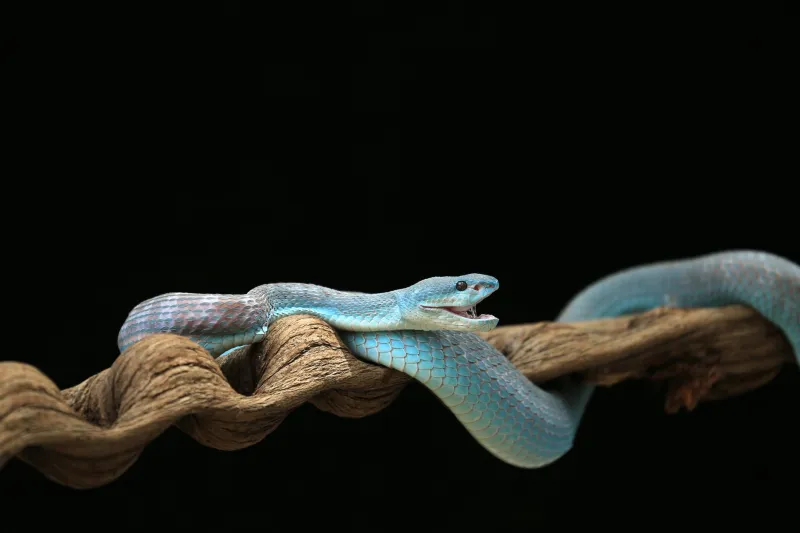
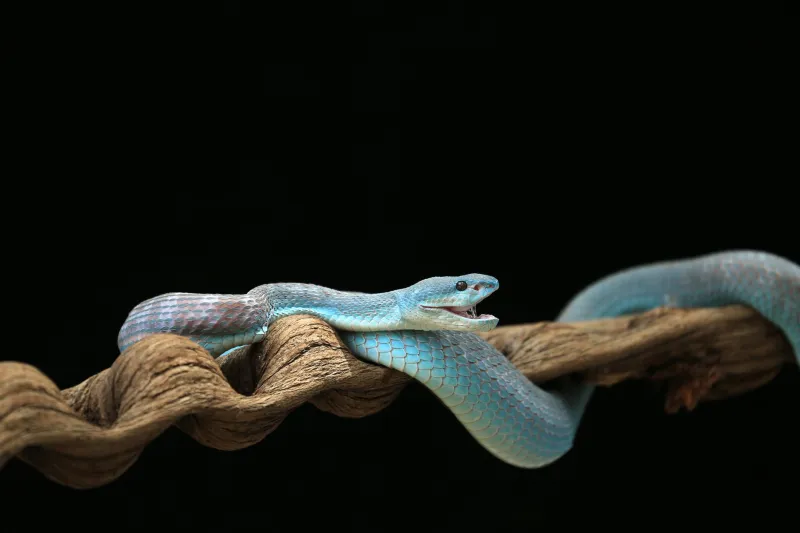
The appeal is layered. On a purely aesthetic level, venomous species offer what many collectors describe as unrivaled visual complexity. The geometric patterning of a Bitis gabonica, for instance, has been studied by textile designers and digital artists alike. The iridescent scalation of certain Asian pit vipers shifts in quality and hue depending on ambient light, producing an effect that no manufactured luxury object can approximate. These are living works of art that no two collectors will ever possess in identical form.
Beyond aesthetics, the genetic dimension of this market has introduced a layer of investment logic familiar to anyone who has tracked thoroughbred bloodlines or vintage wine vintages. Select captive lineages — particularly those with documented multi-generational provenance, exceptional color expression, or demonstrated production of rare recessive morphs — are now treated as genuine assets. A proven breeding pair from a respected private collection can command prices north of $40,000. Exceptional individual specimens with documented genetic history have reportedly cleared six figures in private transactions.
Navigating a Complex Regulatory Landscape
For all its allure, entry into this collecting category demands more than financial resources. The regulatory environment governing venomous reptile ownership in the United States is a patchwork of federal statutes, state prohibitions, and municipal ordinances that requires careful, ongoing legal navigation.
At the federal level, certain species fall under the jurisdiction of the Lacey Act and, in some cases, CITES Appendix protections, which govern import and interstate commerce. At the state level, the landscape varies dramatically: California prohibits private ownership of virtually all venomous species, while states such as Texas, Florida, and Nevada offer comparatively permissive frameworks, provided owners meet specific permit and facility requirements. Some municipalities impose additional restrictions that supersede state law entirely.
Sophisticated collectors engage specialized legal counsel before making any acquisition — a practice that has itself become a marker of seriousness within the community. The permitting process, while demanding, also functions as a de facto barrier to entry, ensuring that the individuals who occupy this space have demonstrated a genuine commitment to compliance and responsible husbandry.
"The paperwork alone tells you something about who belongs here," observed one Florida-based collector who manages a private collection of over thirty venomous species. "This is not a category you enter casually. The regulatory process filters for people who are genuinely invested in doing this correctly."
The Expertise Premium
Beyond legality, the husbandry demands of venomous reptile keeping represent perhaps the most formidable barrier of all. Elite collectors in this space do not simply acquire animals — they invest years in developing the knowledge base required to maintain them at the highest standard of welfare and safety.
This includes mastery of species-specific environmental parameters, feeding protocols, health monitoring, and the specialized handling techniques that allow keepers to work safely with animals capable of delivering medically significant envenomations. Many serious collectors maintain relationships with herpetological veterinarians — a subspecialty so niche that qualified practitioners are found in only a handful of major metropolitan areas — and keep antivenom on hand in accordance with local emergency protocol guidelines.
The learning curve is steep, and the community polices itself accordingly. Established collectors are generally reluctant to sell to buyers who cannot demonstrate adequate preparation. Mentorship relationships are common, with experienced keepers guiding newcomers through their first acquisitions and the operational realities of managing a venomous collection. This culture of accountability has contributed meaningfully to the hobby's evolving reputation.
From Fringe to Investment Category
Perhaps the most telling indicator of this market's maturation is the emergence of formal valuation logic. Breeders who specialize in high-end morphs have begun maintaining detailed genetic records, photographing specimens at multiple life stages, and issuing documentation that accompanies animals through successive ownership transfers — practices borrowed directly from the pedigreed animal and fine art markets.
Auction platforms and private broker networks have developed to facilitate high-value transactions with a degree of formality that was unthinkable a generation ago. Buyers conduct due diligence. Sellers provide provenance. Prices are negotiated with the same deliberateness applied to any significant asset acquisition.
For collectors who entered the space a decade ago, the appreciation in value of well-chosen breeding stock has been substantial. As the pool of genetically exceptional captive animals remains constrained by biology — rare morphs require years of selective breeding to produce, and venomous species reproduce at modest rates — supply-side scarcity continues to support premium pricing.
The Collector's Calculus
What ultimately distinguishes the venomous reptile collector from other enthusiasts in the exotic animal space is the totality of commitment the discipline demands. Financial investment is merely the beginning. What follows — the study, the permitting, the infrastructure, the ongoing husbandry, the community relationships — constitutes a way of engaging with the natural world that is, by definition, reserved for those willing to meet it on its own terms.
For that reason, perhaps more than any other, this category has captured the attention of collectors who have grown weary of luxury goods that can be acquired simply by presenting a credit card. The venomous reptile collection cannot be assembled overnight. It cannot be outsourced. It demands presence, knowledge, and an acceptance of genuine consequence that few collecting categories can match.
In a market landscape increasingly defined by what money alone cannot buy, that distinction carries considerable weight. At Onyxx Exotics, we have long held that the rarest acquisitions are those that reveal as much about the collector as they do about the collected. By that measure, few categories speak more eloquently than this one.