Light in Motion: Why the World's Most Coveted Collectors Are Chasing Iridescence

There is a particular kind of beauty that cannot be photographed — not fully, anyway. Hold a Morpho didius butterfly at one angle and its wings blaze an electric, almost supernatural blue. Tilt it slightly, and the color recedes into a muted bronze. No camera sensor captures the transition faithfully. No digital screen reproduces the depth. That irreproducibility, it turns out, is precisely the point.
Among the most sophisticated collectors operating in the American luxury market today, iridescence has emerged as perhaps the single most sought-after quality in an exotic specimen or rare collectible. The phenomenon — rooted in physics rather than pigment — signals something that static beauty simply cannot: that a piece reveals itself differently to every person who encounters it, and differently still depending on the hour, the light, and the angle of observation. In an era when virtually everything of value can be digitized, duplicated, and distributed, iridescence represents a form of luxury that resists commodification entirely.
The Science Behind the Spectacle
What collectors are responding to, whether they articulate it in these terms or not, is the phenomenon of structural coloration. Unlike conventional color — which results from pigments absorbing certain wavelengths of light — structural color arises from the microscopic architecture of a surface itself. Thin-film interference, diffraction gratings, and photonic crystal arrays all produce the shimmering, angle-dependent effects that define iridescence.
The wings of a Morpho butterfly, for instance, are covered in microscopic ridged scales arranged with the precision of a diffraction grating. They contain no blue pigment whatsoever. The blue that arrests the eye is an optical event — a product of light waves interfering constructively at specific wavelengths. Change the angle, change the wavelength that constructively interferes, and the color shifts accordingly.
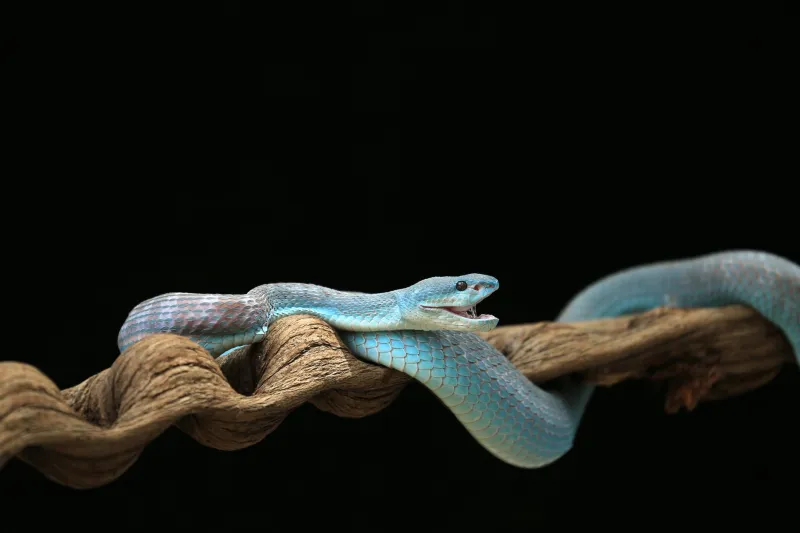
This same principle governs the fire in a fine opal, the shifting spectral play in a labradorite cabochon, and the metallic sheen of a Chrysochroa beetle's elytra. Across the natural world and the mineral kingdom alike, structural coloration represents nature's most sophisticated optical engineering — and collectors are beginning to recognize it as such.
From Natural History to the Trophy Cabinet
The appetite for iridescent specimens is not new, but its current intensity is remarkable. Museum-quality Morpho butterfly displays — once the province of natural history institutions and Victorian gentlemen's studies — have migrated decisively into the private collections of American connoisseurs. Entomological dealers report that color-shifting Chrysochroa and Euchroma beetle specimens, sourced responsibly from Southeast Asia and Central America respectively, command prices that would have seemed implausible a decade ago. Presentation matters enormously: shadow-box framing with archival glass, custom lighting designed to accentuate the angle-dependent shift, and provenance documentation are now considered baseline requirements rather than premium additions.
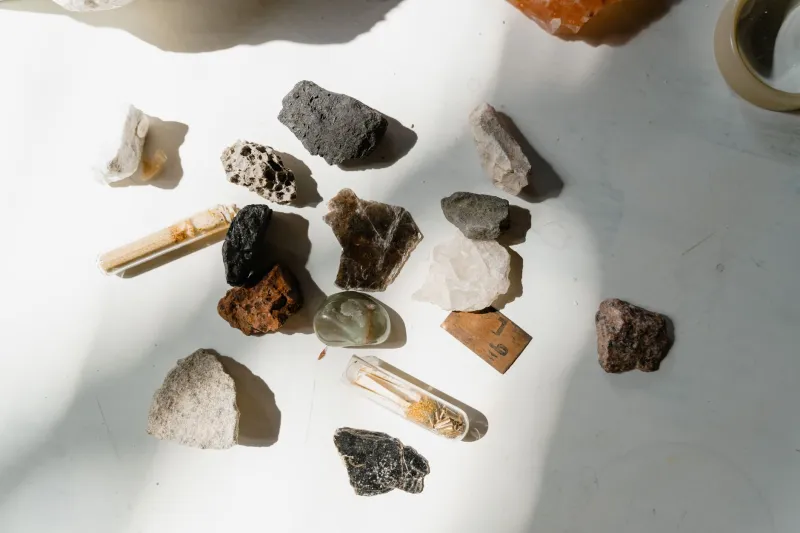
Beyond entomology, the lapidary world has witnessed parallel enthusiasm. Alexandrite — the chromium-bearing chrysoberyl that appears green in daylight and shifts to raspberry red under incandescent illumination — has long been considered among the rarest gemstones on earth. But collector interest has broadened to encompass a wider range of dichroic and pleochroic stones: color-change garnets that transition from teal to purple, parti-colored sapphires that display two distinct hues within a single crystal, and high-grade labradorite specimens whose adularescence produces an internal aurora that appears to float beneath the surface.
The common thread is transformation. These are not objects that reveal themselves completely upon first inspection. They demand continued engagement.
The Status Logic of the Unfixable
Luxury has always been, at its core, about distinction — the possession of something that others cannot easily replicate. For most of recorded history, that distinction was achieved through scarcity of material: gold, silk, sable, ivory. In the contemporary market, however, material scarcity alone is insufficient. The genuinely discerning collector understands that rarity of experience carries equal or greater weight than rarity of substance.
This is where iridescent specimens occupy a uniquely powerful position. Their beauty cannot be flattened into a photograph and shared on a screen without losing its essential character. It cannot be reproduced through manufacturing at scale — structural coloration of the quality found in premium natural specimens requires biological or geological processes operating over timeframes that no factory can compress. And crucially, the experience of viewing such a piece is irreducibly personal: the angle of your gaze, the quality of the ambient light, your physical position relative to the object all determine what you see.
In an age when digital facsimiles of nearly everything circulate freely, owning something that actively resists faithful reproduction is a profound statement. The iridescent collection is, by its nature, anti-viral — its full value exists only in the physical presence of the collector.
Curating the Shifting Collection
For those considering entry into this category, a few principles merit consideration. First, provenance and ethical sourcing are non-negotiable at the level of serious collecting. Reputable dealers will provide documentation of legal acquisition, CITES compliance where applicable, and collection or mining origin. The market for responsibly sourced specimens is robust, and the reputational risk of acquiring questionable material is simply not worth entertaining.
Second, presentation is inseparable from value. An extraordinary Morpho specimen displayed under flat fluorescent lighting is a diminished version of itself. Serious collectors invest in archival mounting, UV-filtering glass, and directional lighting — typically warm-spectrum LEDs positioned to maximize the angular shift — because the display environment is part of the acquisition. Similarly, gemstone specimens benefit from lighting that allows the viewer to manipulate the angle of observation; static jewelry settings often suppress rather than celebrate structural coloration.
Third, condition commands an exponential premium in this category. Structural coloration is produced by microscopic surface architecture, and that architecture is fragile. A Morpho wing with even minor abrasion loses much of its iridescent intensity. A fine alexandrite with surface scratches that scatter incident light will produce a muted color change. Acquiring specimens in exceptional, uncompromised condition — and maintaining them rigorously — is the defining discipline of the serious iridescence collector.
An Acquisition Philosophy Built on Impermanence
There is something philosophically resonant about building a collection around objects whose defining characteristic is that they look different every time you encounter them. The great static trophies of traditional luxury — the flawless diamond solitaire, the uniform sable coat — assert permanence and consistency as virtues. The iridescent collection asserts something more nuanced: that beauty is relational, that it emerges in the encounter between object and observer, and that the most extraordinary things in the world reveal themselves gradually rather than all at once.
For the collector who has moved beyond the acquisition of mere prestige and toward the cultivation of genuine aesthetic experience, that philosophy is not a consolation — it is the entire point. The specimens that shift and shimmer and surprise are not beautiful despite their mutability. They are beautiful because of it.