Living Light: Why Bioluminescent Specimens Are Redefining the Pinnacle of Exotic Collecting
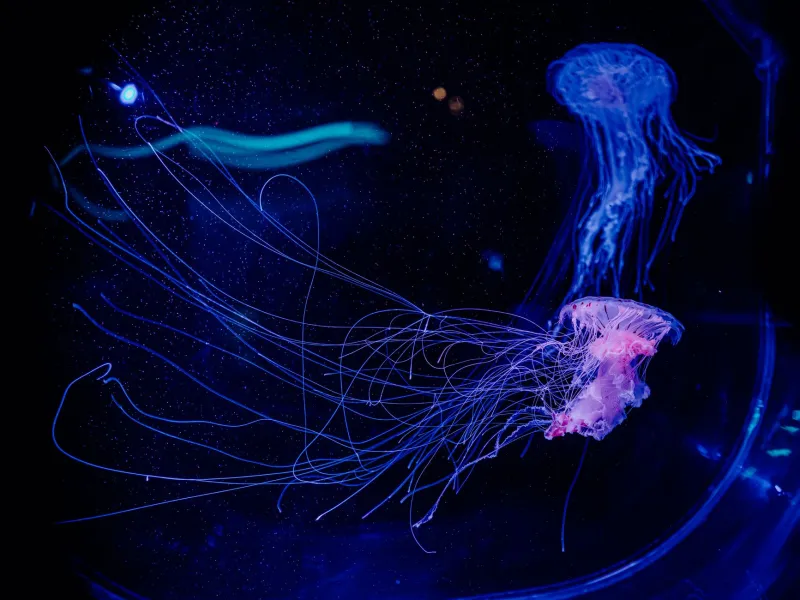
There is a particular kind of silence that settles over a room when the lights go down and a tank of Aequorea victoria jellyfish begins to pulse with cold, ethereal blue-green radiance. No chandelier, no curated gallery lighting, no architectural flourish can replicate it. It is alive. It breathes. It glows on its own terms. For a growing cohort of ultra-high-net-worth collectors across the United States, that distinction—between inert beauty and living luminescence—has become the defining measure of a truly extraordinary acquisition.
Bioluminescent collecting is no longer a curiosity whispered about at marine biology conferences. It has crossed into the rarefied space where serious capital meets serious passion, and the results are reshaping what the most forward-thinking enthusiasts consider worthy of their attention.
The Science Behind the Spectacle
Bioluminescence, the biological production of light through chemical reactions—most commonly the oxidation of luciferin compounds—occurs in an estimated 76 percent of deep-sea organisms and in a surprising range of terrestrial species as well. Fireflies, certain species of fungi, ostracod crustaceans, and select beetle families all produce natural light through variations of this biochemical mechanism.
What makes these organisms so technically demanding to keep is precisely what makes them so compelling. Bioluminescent jellyfish, for instance, require meticulously maintained kreisel tanks—specialized circular aquaria engineered to keep medusae suspended in a gentle, laminar current that mimics open-water conditions. Water temperature, salinity gradients, nitrogen cycling, and photoperiod management must all be calibrated with near-laboratory precision. A single lapse in husbandry can extinguish not only the animal but the investment.
For collectors accustomed to the disciplines required by rare reptiles or sensitive saltwater reef systems, this level of technical commitment is not a deterrent. It is, in many respects, the point.
A Market Still Finding Its Ceiling
Pricing within the bioluminescent specimen category reflects both scarcity and the considerable infrastructure required to produce captive-bred individuals at all. Aquaculture-raised moon jellyfish (Aurelia aurita), the most accessible entry point, can be sourced through specialty marine retailers for several hundred dollars per specimen. However, the more visually dramatic species—Pacific sea nettles, lagoon jellies, and the increasingly sought-after Mnemiopsis leidyi comb jellies—are commanding prices that begin in the low thousands and escalate sharply with size, provenance, and the reputation of the breeding facility.
On the terrestrial side, certain captive-bred click beetle species within the Pyrophorus genus, native to Central and South America and notable for their dual bioluminescent spots, are changing hands among specialist collectors for sums that would surprise anyone unfamiliar with the entomological luxury market. Complete display enclosures—often custom-fabricated from museum-grade acrylic with integrated blackout panels and humidity control systems—can add tens of thousands of dollars to the total cost of a finished presentation.
The rarest category of all remains the glowworm. Several species within the Arachnocampa genus, native to New Zealand and Australia, have attracted intense collector interest in the United States, though import restrictions and the extreme fragility of these larvae-stage organisms make acquisition a formidable challenge even for those with the resources to pursue it.
Ethical Considerations in a Nascent Market
No serious conversation about bioluminescent collecting can proceed without acknowledging the ethical dimensions that define responsible participation in this space. The most reputable purveyors and collectors operate exclusively with captive-bred specimens, maintaining transparent documentation of lineage and breeding conditions. Wild collection of bioluminescent organisms—particularly marine species—carries both legal exposure under international wildlife trade frameworks and a reputational cost that no credible collector should be willing to absorb.
The captive-breeding programs producing the finest specimens are, in many cases, operating at the intersection of commercial aquaculture and genuine conservation science. Several US-based facilities maintain research partnerships with university marine biology departments, contributing to broader understanding of bioluminescent biochemistry while simultaneously developing the husbandry protocols that make long-term captive maintenance viable. Collectors who source from these institutions are, in effect, underwriting work that benefits the field as a whole.
The conversation around sustainable practice is not peripheral to this market—it is foundational to its legitimacy.
The Aesthetic Argument
Beyond the biological and financial calculus, there is a purely experiential case for bioluminescent collecting that resonates with a particular type of collector: one who has already accumulated beautiful things and is now seeking beauty that cannot be replicated.
A signed limited-edition sculpture, a vintage timepiece of impeccable provenance, a painting from a celebrated hand—these are extraordinary objects. But they are static. They do not respond. They do not change. A mature Aurelia aurita medusa drifting in a darkened kreisel, trailing faint luminescent threads in its wake, presents an aesthetic experience that is fundamentally different in kind from anything a conventional luxury acquisition can offer. The light it produces is not reflected or refracted—it is generated, in real time, by a living system of staggering biochemical complexity.
For collectors who have reached the stage where rarity alone no longer satisfies, that quality of aliveness—of irreproducible, moment-to-moment uniqueness—has become the new premium.
Infrastructure as Investment
Sophisticated collectors entering this category quickly discover that the specimen itself is only one component of a considerably larger investment. The supporting infrastructure—custom aquaria, automated dosing systems, purpose-built lighting rigs calibrated to enhance rather than overwhelm bioluminescent output, climate-controlled display rooms—can represent a multiple of the specimen cost.
A number of high-end residential design firms in major American markets have begun offering bioluminescent installation services as a discreet specialty, working alongside marine biologists and custom fabricators to create permanent display environments integrated into private residences, corporate headquarters, and hospitality spaces. The results, when executed properly, are among the most visually arresting interior features available at any price point.
The Collector Profile
Who is buying into this category? The profile that emerges from conversations within the specialist community is consistent: collectors in their late thirties through mid-fifties, concentrated in coastal metropolitan areas, with existing relationships to marine biology, biotechnology, or the life sciences either professionally or through philanthropic engagement. Many have prior experience with high-end reef aquaria or rare reptile collections. They are drawn to bioluminescent specimens not as a departure from their existing sensibilities but as a natural evolution of them—toward greater complexity, greater technical demand, and greater singularity.
They are, in the truest sense, collectors who understand that the most extraordinary things are not simply rare. They are alive.
A Category Worth Watching
The bioluminescent specimen market remains small enough that serious collectors can still establish meaningful positions before broader awareness drives prices beyond the reach of all but a handful of participants. The infrastructure requirements and husbandry demands will always limit the field—this is not a category that will ever become casual. But for those with the resources, the discipline, and the genuine curiosity to engage with it fully, living light represents something that few collecting categories can honestly claim to offer: a genuinely new frontier.