Bottled Rarity: Why Ultra-Wealthy Americans Are Treating Vintage and Limited Fragrance as a Serious Asset Class
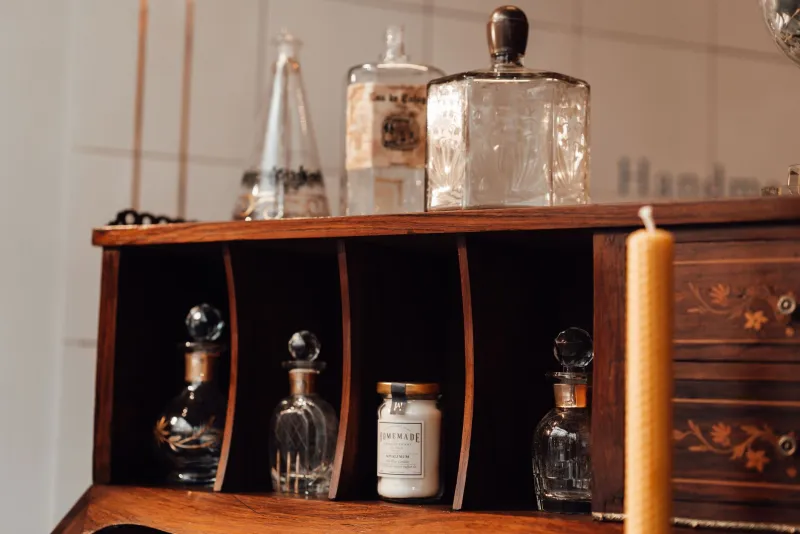
There is a particular kind of collector who understands that true rarity does not always announce itself loudly. It does not arrive on a gallery wall or rest beneath auction house lighting. Sometimes it arrives sealed in a crystal flacon, wrapped in tissue, tucked into a velvet-lined drawer — invisible to the untrained eye, invaluable to those who know precisely what they are holding.
Rare fragrance collecting has crossed a threshold. What was once dismissed as a niche obsession confined to perfume enthusiasts has emerged, with remarkable velocity, as a legitimate luxury asset category — one that ultra-high-net-worth Americans are approaching with the same rigor and intentionality they bring to fine art, vintage wine, and rare timepieces.
The Architecture of Scarcity
To understand why certain fragrances command four- and even five-figure sums on the secondary market, one must first appreciate how scarcity is engineered — and how it is occasionally accidental.
Discontinued releases from legacy couture houses represent the most historically significant tier of the market. When a major fashion house retires a fragrance — whether due to ingredient restrictions, reformulation pressures, or simple commercial calculus — sealed vintage bottles of the original formula become irreplaceable. The European Union's ongoing restrictions on certain aromatic compounds, enforced through the International Fragrance Association, have rendered numerous beloved classics legally unreproducible in their original compositions. A sealed bottle of early-era Guerlain, Caron, or vintage Chanel No. 5 in its pre-reformulation form is not merely nostalgic — it is a document of a sensory world that no longer legally exists.
Beyond the legacy houses, a second and increasingly robust tier has emerged: the niche perfume houses. Operating outside the commercial mainstream, these independent ateliers — many based in the United States, France, and the Arabian Gulf — produce fragrances in deliberately restricted quantities. Houses such as Xerjoff, Amouage, and Roja Parfums have cultivated devoted collector bases willing to pay extraordinary premiums for limited-edition releases, exclusive collaborations, and bespoke commissions. For serious collectors, acquiring a numbered bottle from a celebrated independent perfumer carries a prestige that no department store counter can replicate.
Investment Logic in an Olfactory Market
The financial case for rare fragrance is increasingly coherent, even if it remains underappreciated by traditional wealth advisors.
Authenticated vintage bottles have demonstrated consistent appreciation over the past decade, with certain discontinued releases from the mid-twentieth century doubling or tripling in value within five-year windows. The market for pre-reformulation Shalimar, vintage Mitsouko, and original-formula Opium has proven particularly robust, driven by a global collector base that includes serious buyers from New York, Los Angeles, Dubai, and Tokyo.
Limited-edition releases from niche houses behave differently but comparably. A fragrance produced in a run of five hundred bottles, retailing at $400, may command $1,200 or more within eighteen months of sell-out — particularly if the perfumer involved has achieved critical recognition or if the raw materials used have since become restricted or prohibitively expensive.
For collectors at the highest tier of the market, bespoke commissions represent the ultimate expression of olfactory investment. Commissioning an original fragrance from a celebrated nose — a master perfumer with a distinguished atelier pedigree — produces something genuinely singular: a scent that exists nowhere else on earth, whose value is bounded only by the reputation of its creator and the provenance of its documentation.
Authentication: The Market's Most Pressing Challenge
No serious discussion of rare fragrance collecting can omit the authentication problem, which is both the market's greatest vulnerability and its most compelling intellectual challenge.
Unlike a painting or a timepiece, a fragrance cannot be authenticated through visual inspection alone. The liquid inside a sealed vintage bottle may have degraded, been replaced, or been diluted — and without breaking the seal, verification is extraordinarily difficult. Gas chromatography and mass spectrometry can analyze fragrance composition with scientific precision, but these tests are expensive, require specialized laboratories, and are rarely practical for routine acquisitions.
The secondary market — conducted primarily through specialist dealers, private sales, and platforms such as Fragrantica's marketplace and dedicated collector forums — operates largely on reputation, provenance documentation, and community trust. Experienced collectors develop an intuitive literacy for period-correct packaging, appropriate glass aging, seal integrity, and fill levels consistent with evaporation rates over time. New entrants to the market are advised to cultivate relationships with established specialist dealers before making significant acquisitions independently.
Authentication services for high-value fragrance are an emerging industry. Several boutique consultancies now offer provenance research and condition assessments for significant acquisitions, a development that signals the market's maturation and growing institutional seriousness.
Storytelling as Currency
Perhaps the most distinctive characteristic of the rare fragrance market — and the quality that most closely aligns it with the broader world of extraordinary collecting — is the degree to which narrative drives desirability.
A fragrance worn by a documented historical figure. A limited release tied to a significant cultural moment. A perfume created by a master nose who has since retired or passed away. A scent composed using an ingredient — Mysore sandalwood, Haitian vetiver of a particular vintage, genuine ambergris — that is now essentially impossible to source. Each of these narratives compounds a fragrance's desirability in ways that transcend the liquid itself.
The most sophisticated collectors understand that they are not simply acquiring a scent. They are acquiring a chapter of olfactory history — a sensory artifact that connects them to a particular moment in time, a particular creative vision, a particular expression of human refinement that will not come again.
Entry Points for the Serious Collector
For those approaching this category with genuine intent, the landscape rewards patience and education above all else.
Beginning with documented vintage releases from established couture houses — preferably with clear provenance and original packaging — provides a foundation of historical literacy that informs more ambitious acquisitions. Engaging with the specialist community, attending fragrance events in New York and Los Angeles, and cultivating relationships with reputable dealers accelerates the development of the connoisseurship that this market demands.
At the highest level, direct engagement with niche perfume houses — through subscription programs, exclusive clientele lists, and bespoke commissions — places serious collectors at the front of the queue for the rarest releases before they ever reach the secondary market.
Rare fragrance is not a category for the passive or the impatient. But for those willing to develop genuine expertise, it offers something that few luxury categories can match: the acquisition of beauty that is, by its very nature, invisible — known only to those extraordinary enough to recognize it.