Beyond the Ordinary: Five Collecting Categories That Separate True Connoisseurs From the Crowd
Collecting, at its most elemental, is an act of curation. It reflects not merely what one can afford, but what one understands — and what one is willing to pursue with the sustained dedication that genuine rarity demands. The categories outlined below are not for the casual enthusiast. They require specialized knowledge, established relationships with trusted sources, and a willingness to invest at levels that most collectors will never approach. They also offer something that no standard-issue acquisition can provide: the singular satisfaction of owning what almost no one else on earth possesses.
1. Fluorescent Mineral Specimens: The Invisible Made Spectacular
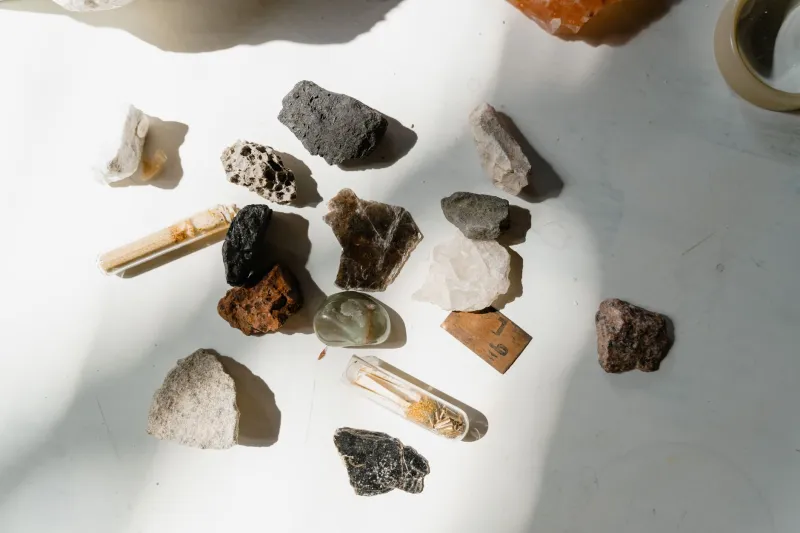
To the uninitiated, a fluorescent mineral specimen appears to be a modest, unremarkable rock. Under shortwave ultraviolet light, it becomes something else entirely — a landscape of neon color so intense and unexpected that first-time viewers frequently struggle to believe what they are seeing. Willemite blazes emerald green. Calcite pulses orange. Franklinite remains a dramatic black anchor amid the spectacle.
The Franklin and Sterling Hill mining districts of New Jersey remain the global epicenter of fluorescent mineral collecting, producing specimens that command prices ranging from $500 for entry-level display pieces to well over $50,000 for museum-grade examples featuring multiple fluorescent species in a single matrix. The finest specimens are sourced through specialist dealers, estate sales, and dedicated mineral shows — most notably the Tucson Gem and Mineral Show, which draws serious collectors from across the country each February.
What elevates this category above general mineral collecting is the dual nature of the specimens themselves: they exist in two visual states simultaneously, and mastering the appreciation of both requires genuine study. Serious collectors invest in high-quality shortwave UV equipment, climate-controlled display cabinetry, and ongoing relationships with geologists who can authenticate and assess individual pieces. Entry into this world at a meaningful level typically requires an initial investment of $5,000 to $15,000, with top-tier collections representing significantly more.
2. Designer Reptile Morphs: Living Art in Private Terrariums
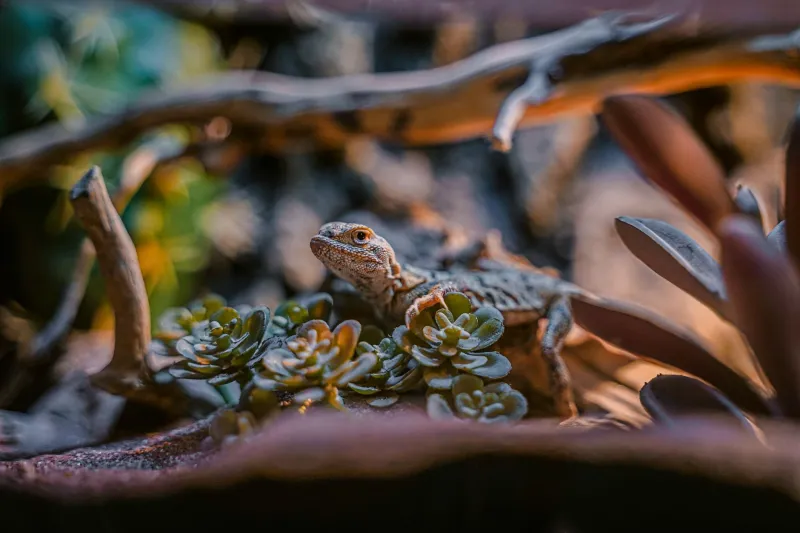
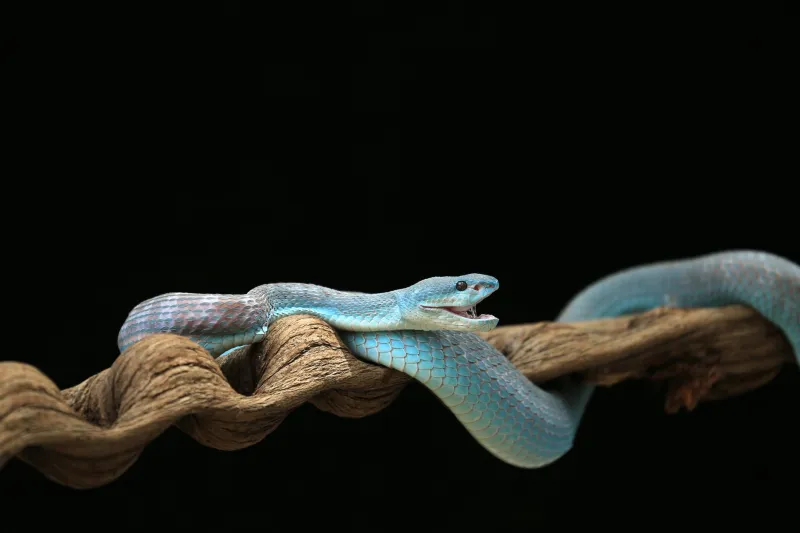
The selective breeding of exotic reptiles has, over the past three decades, produced what can only be described as living works of genetic art. Ball pythons, leopard geckos, and bearded dragons are among the species that have undergone the most extensive morph development — with some individual specimens combining six, eight, or even ten distinct genetic traits to produce color and pattern expressions that have no analog in nature.
The most coveted combinations — such as the panda pied ball python, the black-eyed leucistic, or the high-expression super black pastel — regularly trade at private auction for figures between $5,000 and $30,000. Breeding-quality specimens with documented lineage from established producers command the highest premiums, as their genetic value extends beyond the individual animal to the offspring it may produce.
Sourcing at this level is emphatically a relationship business. The most accomplished breeders in the United States — many operating out of Florida, Texas, and the Carolinas — maintain waiting lists that extend years into the future and conduct thorough vetting of prospective buyers. The collector who approaches this market with patience, demonstrated knowledge, and a commitment to proper husbandry will find doors open that remain firmly closed to those who arrive with only a checkbook.
3. Antique Scientific Instruments: The Aesthetics of Inquiry
There exists a category of collecting that sits at the precise intersection of intellectual history and decorative arts: the acquisition of antique scientific instruments. Brass sextants from the age of maritime exploration, Victorian-era orreries that model planetary motion in miniature, hand-ground optical microscopes from the early 19th century — these objects were, in their time, the most sophisticated technology available to human civilization. They remain, in the present, objects of extraordinary beauty and cultural weight.
The American market for antique scientific instruments is served by a small number of specialist dealers concentrated in New England and the mid-Atlantic states, as well as by periodic offerings through major auction houses. Price points vary enormously by category and condition: a fine 18th-century compass might be acquired for $2,000, while a complete, functional orrery of the same period could reach $200,000 or beyond. Authentication is a critical concern, as the market has historically been subject to sophisticated reproductions.
Serious collectors in this space typically develop expertise in a specific sub-category — navigation instruments, optical devices, surveying equipment — and build collections around a coherent historical or technical theme. The result is not merely an assemblage of objects but a curated argument about a particular chapter of human intellectual achievement.
4. Rare Dart Frog Morphs: Jewels of the Living Vivarium
Poison dart frogs — Dendrobatidae — have become one of the most sophisticated frontiers in exotic animal collecting, precisely because their care requirements demand genuine expertise and their visual variety is, quite literally, without parallel in the animal kingdom. Captive-bred morphs of species such as Ranitomeya imitator, Oophaga pumilio, and Dendrobates tinctorius display color combinations and pattern variations so extreme that specimens from adjacent geographic populations can appear to be entirely different species.
The rarest locality morphs and captive-developed color forms trade in ranges from $200 to several thousand dollars per individual frog, with breeding pairs of the most sought-after variants commanding premiums that reflect both their visual rarity and the extraordinary difficulty of successful reproduction in captivity. The vivarium itself — a carefully engineered slice of tropical ecosystem — represents an additional significant investment, with display-quality planted bioactive setups ranging from $1,500 to $20,000 depending on scale and complexity.
This category demands a level of commitment that filters out casual interest almost automatically. Successful dart frog keeping requires precise temperature and humidity management, extensive botanical knowledge for vivarium planting, and a thorough understanding of the species' dietary and reproductive biology. Those who master these requirements gain access to one of the most visually spectacular and intellectually engaging forms of exotic animal husbandry available to private collectors.
5. Meteorite Specimens: Owning a Fragment of Deep Time
No collecting category offers quite the same philosophical resonance as meteorites. These are objects that predate the formation of the Earth itself — fragments of asteroids, and in some cases other planets, that have traveled billions of miles through space before arriving, against all probability, at a specific location on this planet's surface. To hold a pallasite meteorite — its olivine crystals glowing amber against a nickel-iron matrix — is to hold something that formed approximately 4.5 billion years ago.
The American meteorite market is served by specialist dealers, dedicated auction platforms, and the annual Tucson show, where the finest specimens change hands in transactions that range from a few hundred dollars for small iron fragments to well over $500,000 for exceptional pallasites or rare lunar and Martian meteorites. Authenticity documentation from recognized laboratories is essential, and provenance — including the specific fall or find location — significantly affects value.
Collectors in this space often develop expertise in specific meteorite classifications: irons, stony-irons, carbonaceous chondrites, or the extraordinarily rare achondrites of planetary origin. The most sophisticated collections tell a coherent story about the formation and evolution of the solar system — a narrative rendered not in words, but in the most ancient physical objects that human hands will ever touch.
Each of these five categories rewards the same fundamental qualities: sustained curiosity, disciplined study, and the patience to pursue excellence rather than mere acquisition. At Onyxx Exotics, these are the qualities we recognize in our most distinguished clientele — and the standard against which every offering we curate is measured.