Tuned to Perfection: How Bespoke Audio Equipment Became the Ultimate Trophy for America's Most Discerning Collectors
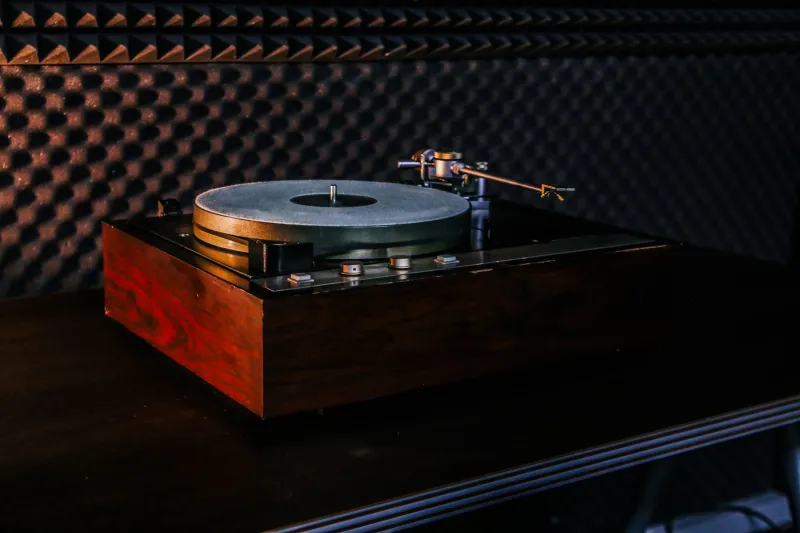
There is a particular kind of silence that precedes genuine luxury — the held breath before a Stradivarius draws its first note, the stillness inside a watch atelier before a complication is set into motion. For a quietly expanding circle of American collectors, that same reverence now accompanies the act of lowering a tonearm onto a lacquer-cut reference disc, or the moment a vacuum tube amplifier reaches its operating temperature and the room fills with something that can only be described as alive.
Bespoke audiophile equipment — handcrafted loudspeakers, single-owner turntable commissions, tube amplifiers wound to specification by a single artisan — has emerged as one of the most compelling and least publicized frontiers in luxury collecting. Six-figure expenditures are no longer exceptional in this space. They are, increasingly, the entry point.
The Anatomy of an Obsession
To understand why acoustic collecting has captured the imagination of America's most sophisticated buyers, one must first abandon the assumption that this is simply about listening to music. For the serious collector, a reference-grade audio system is closer in spirit to a museum installation than to consumer electronics. The components are selected with the same deliberateness applied to acquiring a post-war painting or a first-growth Bordeaux — provenance, rarity, and measurable excellence are non-negotiable criteria.
Consider the market for handcrafted loudspeakers from boutique European and American workshops. Studios such as Magico in California, Cessaro in Germany, and the legendary Rockport Technologies in Maine produce instruments — the word "speaker" feels insufficient — that are machined from aerospace-grade aluminum, carbon fiber, and exotic hardwoods. Production runs are deliberately constrained. Waiting periods stretch across years. Prices for flagship models routinely exceed $150,000 per pair, and certain limited commissions have traded privately for considerably more.
What separates these objects from mass-produced audio equipment is not merely the materials, though those are extraordinary. It is the philosophy embedded in every design decision: that sound reproduction, pursued with sufficient rigor, becomes indistinguishable from the original acoustic event. Collectors in this space speak of "disappearing" into a recording — of hearing the breath of a cellist, the resonance of a concert hall's back wall, the decay of a piano note as it surrenders to silence. This is the language of connoisseurship, and it is entirely deliberate.
Rarity as the Governing Principle
The parallels between audiophile collecting and other elite categories are not incidental. Much as the rarest wines derive their value from the irreproducibility of a particular vintage and terroir, the most coveted audio components derive theirs from the irreproducibility of a specific craftsman's hand, a discontinued material, or a manufacturing tolerance that simply cannot be replicated at scale.
Vintage Western Electric amplifiers — produced in limited quantities for professional cinema use during the mid-twentieth century — now command prices between $50,000 and $300,000 at private auction, depending on condition and configuration. Original Altec Lansing Voice of the Theatre systems, once considered commercial workhorses, are now meticulously restored and installed in purpose-built listening rooms by collectors who regard them as historical artifacts of acoustic science.
The secondary market for these instruments has matured considerably. Specialist dealers operating out of New York, Los Angeles, and Chicago maintain curated inventories and authenticate provenance with the same diligence applied to fine art. Several prominent auction houses have begun incorporating high-end audio lots into their design and collectibles sales, recognizing that the buyer profile overlaps substantially with established luxury categories.
The Architecture of Listening
Perhaps the most telling indicator of audiophile collecting's ascent into genuine luxury territory is the emergence of the dedicated listening room as an architectural statement. Among the ultra-wealthy, the wine cellar and the home theater have long been recognized as markers of refined taste. The purpose-built acoustic listening room is now earning a comparable designation.
These spaces are designed by acoustic engineers who operate at the intersection of physics and aesthetics. Walls are constructed with specific mass and isolation characteristics. Diffusion panels are positioned according to mathematical modeling. Flooring materials are selected for their damping properties. The result is an environment engineered to vanish — to impose nothing of itself on the sound, allowing the components to perform without interference.
The investment required for such a room, exclusive of the equipment it houses, frequently exceeds $200,000. When combined with a reference system, the total commitment can approach or surpass the cost of a significant contemporary artwork. Collectors who have made this investment speak of it not as an indulgence but as a logical extension of their broader philosophy: that the pursuit of the extraordinary demands an environment worthy of it.
Sound as Cultural Capital
What distinguishes the most sophisticated participants in this market is their understanding of acoustic collecting as a form of cultural engagement rather than mere consumption. The serious audiophile collector does not simply acquire equipment; they curate an experience, develop a vocabulary for evaluating it, and engage with a global community of peers who share their exacting standards.
In this sense, the culture surrounding high-end audio is structurally similar to that of fine wine or vintage watchmaking. There are canonical texts, revered mentors, contested methodologies, and ongoing debates about the relative merits of competing approaches — tubes versus solid-state amplification, analog versus digital source material, single-driver versus multi-way loudspeaker design. Navigating these conversations with authority is itself a form of expertise, one that confers standing within the community.
For American collectors accustomed to defining excellence through tangible metrics — provenance, rarity, appreciation potential — audiophile equipment offers an additional dimension: the purely subjective experience of beauty. A rare loudspeaker does not merely hold its value; it delivers, on a daily basis, something that cannot be purchased in any other form.
The Quiet Frontier
What makes acoustic collecting particularly compelling from the perspective of the serious connoisseur is precisely its relative obscurity. Unlike contemporary art or fine watches, where market visibility has attracted speculative capital and institutional attention, the high-end audio world remains largely the province of those who discovered it through genuine passion rather than financial calculation.
This is changing, gradually and inevitably. As younger affluent Americans seek collecting categories that reward depth of knowledge and resist easy commodification, bespoke audio equipment presents a compelling proposition. The barriers to meaningful participation are high — in terms of both financial commitment and the time required to develop genuine discernment. Those barriers, as any serious collector understands, are precisely what makes the pursuit worthwhile.
At Onyxx Exotics, we have long maintained that the rarest things in the world are not always the most visible. Sometimes they exist in the space between a note and its resolution — in the particular quality of silence that only the finest instruments can produce. For those who have heard it, no further explanation is necessary. For those who have not, no explanation will suffice.