Feathers as Fortune: Inside the High-Stakes World of Investment-Grade Avian Color Mutations
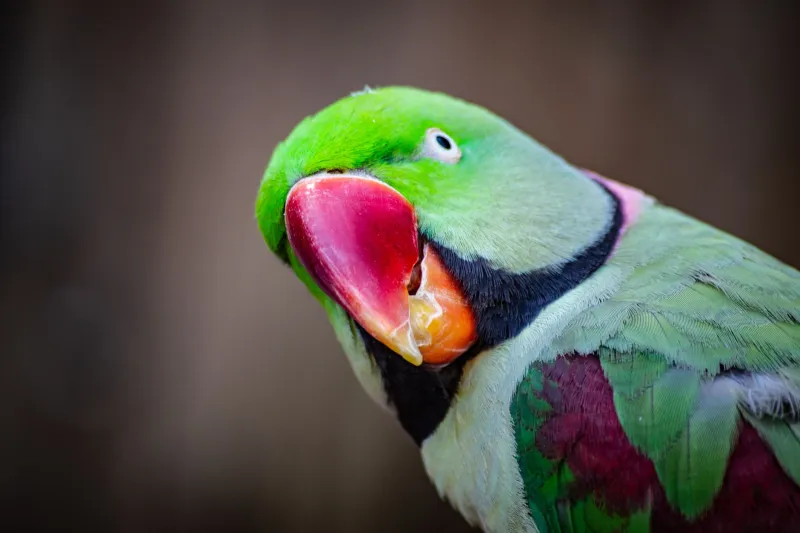
For most of American history, the idea of treating a bird as a serious financial asset would have drawn polite skepticism at best. Today, it draws wire transfers well into the six-figure range. A new generation of ultra-affluent collectors — many of them already conversant in fine art, rare watches, and alternative asset classes — has discovered that certain genetically documented avian color mutations occupy a category entirely their own: irreplaceable, biologically authenticated, and increasingly scarce.
This is not the casual world of pet ownership. It is something considerably more deliberate.
The Science Behind the Spectrum
To understand why particular birds command prices that rival fine jewelry, one must first appreciate what a true color morph represents at the biological level. Avian coloration is governed by a complex interplay of structural pigmentation, melanin pathways, and, in many species, the Tyndall effect — the scattering of light through feather microstructure that produces the iridescent blues and greens prized in species such as the hyacinth macaw and the Cotinga genus of South America.
When a spontaneous genetic mutation disrupts one or more of these pathways, the results can be extraordinary. Leucism — a condition that reduces pigmentation across the board — can produce birds of near-total white plumage with retained eye color, distinguishing them from true albinos. Melanism produces specimens of deep, saturated darkness. Rarer still are partial mutations: a hyacinth macaw expressing a partial lutino trait, for instance, or a green-winged macaw whose feathering shifts toward a warm amber that has no precedent in the wild population.
These are not accidents collectors stumble upon. They are events — documented, photographed, and increasingly subjected to genetic sequencing at the time of hatch.
Provenance as the New Premium
What separates the serious avian collector of 2024 from the enthusiast of a decade prior is an insistence on documentation that would feel familiar to any seasoned art dealer. Leading breeders in the United States now provide comprehensive genetic records alongside each exceptional specimen — lineage charts tracing three or more generations, veterinary certifications, hatch records, and in some cases, laboratory-confirmed genetic analysis identifying the specific alleles responsible for the mutation in question.
This paperwork, once considered optional, has become the primary driver of valuation. A leucistic hyacinth macaw offered without documented lineage will sell at a fraction of the price commanded by an identically plumaged bird whose genetic history is fully traceable. The parallel to fine art provenance is not merely rhetorical — it reflects a genuine shift in how these animals are perceived within the collector community.
Several prominent aviculture estates in Texas, Florida, and California have begun maintaining what amount to private registries: catalogued records of every exceptional morph produced over decades of selective breeding, cross-referenced with photographic archives and health documentation. These registries are becoming selling points in their own right.
The Species Commanding Attention
Within the current market, a handful of species and mutation types have emerged as the focal points of serious collector interest.
The hyacinth macaw — already the largest and among the most expensive of all parrots in standard form — becomes exponentially more valuable when expressing partial or full color mutations. A confirmed blue hyacinth expressing lutino gene expression, producing a bird of greenish-gold rather than cobalt, has no established ceiling price because so few exist.
The Spix's macaw, effectively extinct in the wild and subject to rigorous international breeding programs, occupies a category defined more by legal complexity than market dynamics — but its story underscores the premium that genuine scarcity commands.
Among softbills, the Cotinga genus — particularly the banded cotinga and the purple-breasted cotinga — has attracted significant attention from collectors who appreciate that the structural coloration of these birds is among the most visually dramatic in the avian world. Mutation-expressing specimens are vanishingly rare and seldom available on the open market.
Eclectus parrots expressing non-standard coloration, caiques with documented melanistic traits, and certain lory species displaying partial albinism have also entered collector conversations at price points that would have been unthinkable five years ago.
Acquisition in Practice
For those accustomed to navigating private sales in the watch or wine markets, the acquisition process for investment-grade avian specimens will feel broadly familiar — and in some respects, considerably more demanding. The most exceptional birds rarely appear on public platforms. They move through established relationships between breeders and collectors, often with multi-year waiting periods and right-of-first-refusal agreements that keep the finest specimens within known circles.
Reputable brokers who specialize in this space — a small but growing professional class — operate with the discretion one would expect of a private art dealer. They facilitate introductions, conduct preliminary due diligence on documentation, and in some cases arrange independent veterinary assessments before a transaction is finalized.
Price negotiation, while present, is tempered by the reality that the seller of a genuinely exceptional specimen has limited incentive to discount. The supply side of this market is, by definition, constrained.
The Ethical Framework
No serious discussion of this market is complete without acknowledging the regulatory and ethical architecture within which it operates. The United States, through the Migratory Bird Treaty Act, the Wild Bird Conservation Act, and state-level protections, maintains one of the more rigorous frameworks governing exotic bird ownership and trade. Collectors operating at the highest levels of this market are not merely compliant with these frameworks — they are often among their most vocal advocates, recognizing that legal clarity and conservation credibility are inseparable from long-term value retention.
Captive breeding, conducted responsibly and with full documentation, is the only legitimate pathway for acquiring most of the species discussed here. The collector who invests in a properly documented, captive-bred specimen is simultaneously supporting the conservation infrastructure that makes the species' continued existence possible — a consideration that adds a dimension of meaning absent from most other asset classes.
A Living Archive
What distinguishes avian color morph collecting from virtually every other category of luxury acquisition is its irreducibly animate nature. These are not objects to be stored in climate-controlled vaults. They require expert husbandry, specialized nutrition, veterinary relationships, and environments engineered to support both physical health and psychological complexity. The collector who approaches this market without a genuine commitment to the welfare of the animal will find the investment both ethically compromised and practically unsustainable.
For those who approach it correctly, however, the reward is singular: ownership of something that cannot be manufactured, replicated, or approximated — a living expression of biological rarity, authenticated by science and refined by decades of careful stewardship. In a world where genuine scarcity is increasingly difficult to find, that proposition speaks for itself.